
How to Remove Pet Stains from Your Couch: A Step-by-Step Guide
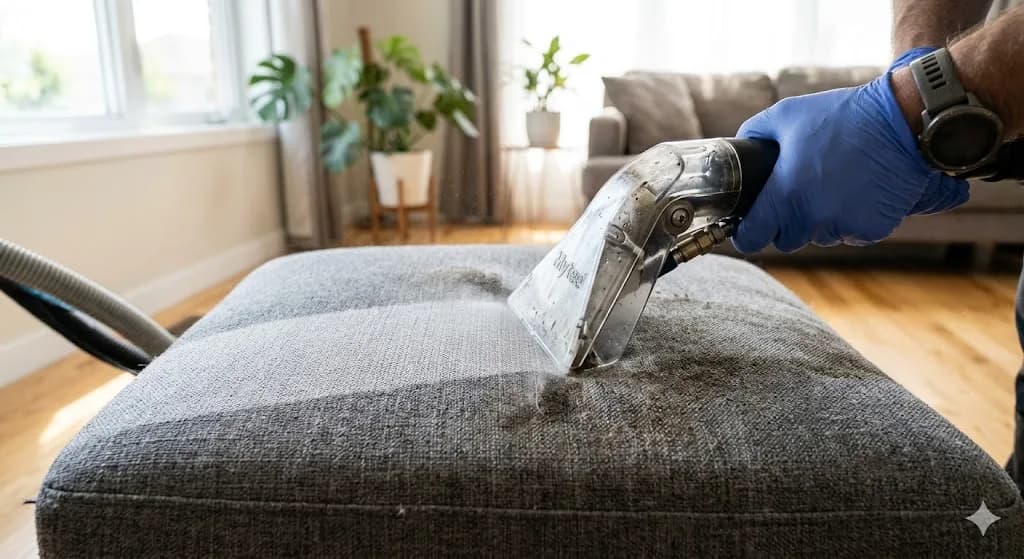
Fresh Spills: Start with Gentle Blotting
Prompt blotting can help limit how much liquid reaches the cushion filling. Avoid rubbing or adding cleaner before checking the fabric care label. Stain removal depends on the material, contamination and previous treatment; no fixed success rate applies.
Gently blot fresh liquid with a clean white cloth, then check the care label before attempting further treatment.
Fresh Pet Urine: Step-by-Step Removal
What You Need
- • Paper towels or clean white cloths
- • A cleaner permitted by both the upholstery care label and the product directions
- • Access to ventilation for drying
- • A vacuum with upholstery attachment
Step 1: Blot, Do Not Rub
Gently blot fresh liquid with clean white cloths, replacing them as they become damp. Avoid rubbing, scrubbing or pressing hard enough to force liquid further into the cushion.
Step 2: Check Suitability and Spot Test
Read the furniture care label before applying any liquid. If the fabric and product directions permit spot cleaning, test an inconspicuous area and use only the stated amount of an upholstery-suitable cleaner. Avoid saturating the cushion filling.
Step 3: Follow the Product Instructions
Follow the product label for contact time, removal and any rinsing instructions. Different products and fabrics require different methods; do not use a fixed wait time or cover the area unless the product directions specifically call for it.
Step 4: Blot Again and Air Dry
Remove residue as the product directions require and allow the fabric to dry with suitable ventilation. Keep people and pets away until the furniture is fully dry and any product instructions have been met. Avoid direct heat unless the care instructions allow it.
Step 5: Check the Result
Once the fabric is dry, check for remaining staining, odour or texture changes. Do not keep adding powders, fragrances or other cleaners to mask a persistent problem. Request an assessment if the result is unsatisfactory.
Old or Dried Pet Urine: A Harder Problem
Older stains and odours can persist when contamination has reached the cushion filling. Cleaning the visible fabric may not address deeper material, and not every item can be fully restored.
Avoid repeated soaking or combining treatments. Share the care label, photos and details of previous products with a professional so the material, filling and realistic options can be assessed.
What Not to Do
- Do not improvise with household chemicals. Use only a product suitable for the fabric and follow its directions.
- Do not use bleach or mix products. Follow the furniture and cleaner instructions.
- Do not apply unapproved heat or moisture. The fabric and filling must be suitable for the proposed method.
- Do not scrub aggressively. It damages fibres and spreads the stain.
Pet Hair: The Constant Battle
Pet hair is not a stain but it is the most common pet-related upholstery complaint from GTA homeowners. Vacuuming alone often misses embedded hair. A few methods actually work:
- Rubber gloves: Dampen a rubber kitchen glove and run your hand across the fabric. Hair clumps into rolls you can pick up.
- Pet hair rollers or lint rollers: Cheap, effective, but slow for large pieces.
- Rubber squeegee: The same tool professional window cleaners use works surprisingly well on upholstery.
- Care-label check: Avoid adding fabric softener or homemade sprays; residue or moisture may affect the fabric.
Regular care-label-compatible vacuuming helps manage loose pet hair. If hair or soil remains embedded, ask which professional method is suitable for the fabric and condition.
When to Call a Professional
Home methods work well for fresh, surface-level stains. Call a professional upholstery cleaner in Toronto if any of these apply:
- • The staining covers a large area or the fabric is unfamiliar
- • Odour persists after multiple home treatments
- • Urine has soaked through the cushion (you can feel wet or stiff padding)
- • Multiple stains from repeated accidents
- • The furniture is expensive or the fabric is delicate (silk, velvet, wool)
- • The piece is a mattress with deep urine penetration
Professional cleaning can include enzyme pre-treatment, deodorizing, and extraction equipment substantially stronger than consumer machines. See our Toronto upholstery quote guide for the details that affect a written quote.
Frequently Asked Questions
What is the best product to remove pet urine from a couch?
Choose a product labelled for the fabric and type of staining, and follow both the furniture care label and product directions. An upholstery-suitable pet-stain cleaner may help, but not every fabric tolerates water or the same treatment. Test an inconspicuous area first. Do not mix cleaning products or use bleach on the stained upholstery.
Can you get dried pet urine out of a couch?
Dried or repeated urine staining can be difficult to remove, especially if liquid has reached the cushion filling. Results depend on the fabric, depth of contamination and previous treatments. Avoid repeatedly soaking the furniture; ask for an assessment when odour persists or the filling has been affected.
Will vinegar remove pet urine from a couch?
Do not assume a homemade vinegar mixture is suitable for your upholstery. Check the furniture care label and use only an approved cleaning method. Persistent pet odour or staining may need a material-specific assessment, and complete removal cannot be guaranteed.
How do you get pet vomit out of upholstery?
Lift solid material carefully without spreading it, then gently blot liquid with a clean white cloth. Check the care label before using any liquid or cleaner. Follow the instructions for an upholstery-suitable product and test a hidden area first; delicate fabrics or persistent staining should be assessed by a professional.
When should I call a professional for pet stains?
Request an assessment when liquid has soaked into the cushion filling, odour persists, staining covers a large area, accidents have repeated or the fabric is delicate or unfamiliar. Share photos, the care label and any products already used so suitability and likely results can be reviewed.
Can pet stains permanently damage a couch?
Pet stains can leave lasting discolouration or odour, especially when liquid reaches the cushion filling. Results depend on the fabric, stain age and previous treatments. Blot fresh spills promptly, follow the care label and arrange a fabric assessment for persistent staining or odour; complete removal cannot be guaranteed.
Stubborn Stain? Let Us Handle It
Pet urine that won't quit? Old stains that came back with the humidity? Send us a photo and we'll text you a quote for professional enzyme treatment.